AI Event Activation That Beats Free Swag
AI event activation turns merchandise into a live creative moment, giving attendees one-of-one products and brands measurable energy on the event floor.
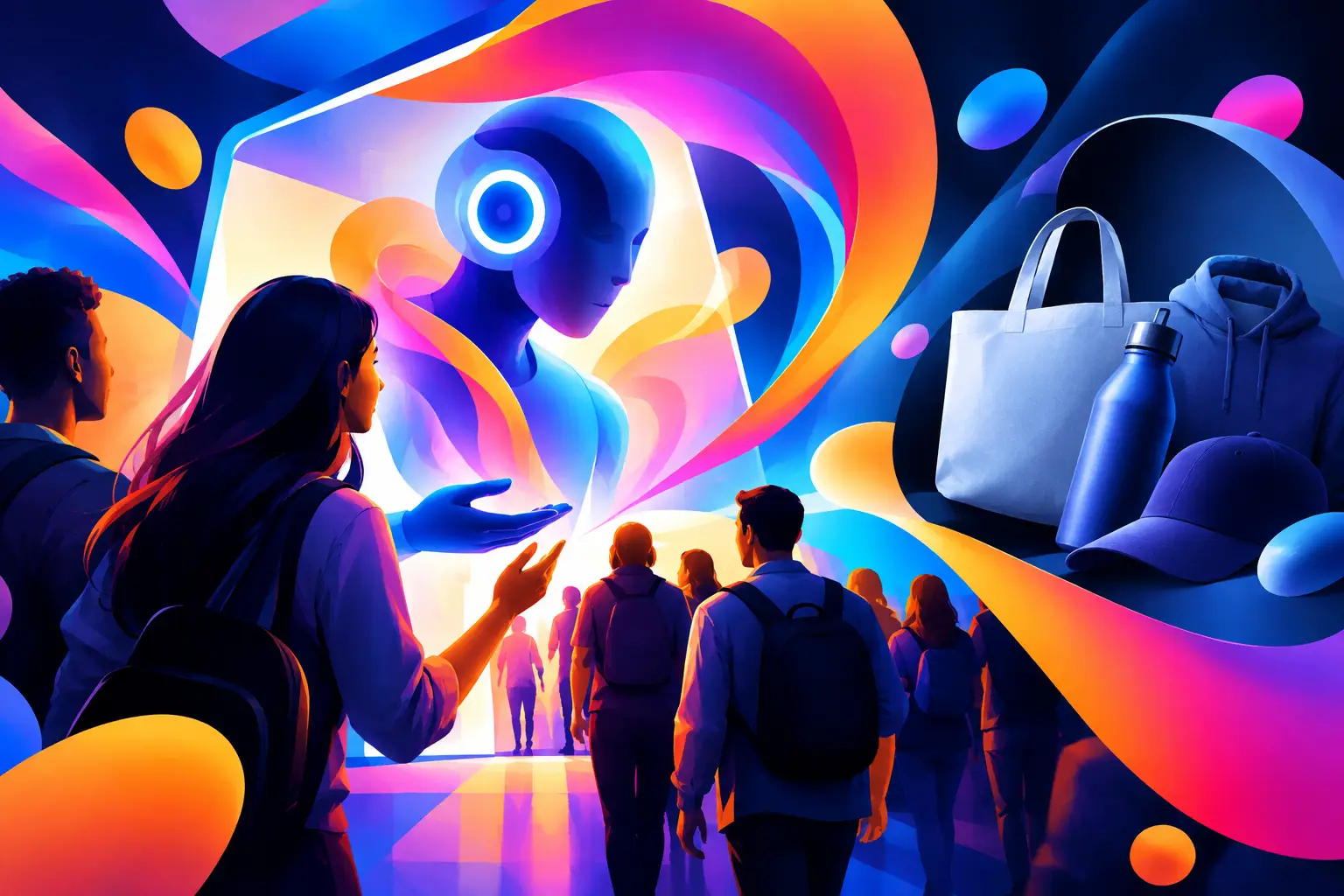
A tote bag piled on a six-foot table is not an activation. It is inventory waiting to become landfill. AI event activation changes the equation by putting the attendee in the creative seat, then turning their idea into a retail-quality product while the energy of the event is still in the room.
For event marketers, that distinction matters. The best booth build, sponsorship footprint, or product launch can lose momentum if the takeaway feels like a generic afterthought. A one-of-one shirt, poster, phone case, or leather good carries a different kind of value: it is personal, made in public, and far more likely to leave the venue, show up on social, and stay in someone’s rotation.
What AI Event Activation Actually Means
AI event activation uses generative AI as a live creative interface between a brand and its audience. An attendee enters a prompt, selects a visual direction, or works from a branded set of creative inputs. The system creates an original design within a campaign framework, and an on-site production team prints it onto a chosen product in real time.
The technology is only one part of the experience. The activation needs to feel intentional from the first moment someone sees the footprint. It needs a clear invitation to participate, an interface that moves quickly, visual directions that protect the brand, premium blanks that make the final product worth keeping, and a production line designed for real event traffic.
That is why AI event activation should not be treated as a novelty screen bolted onto a merch table. It is a format for participation. The attendee does not just receive the brand message. They help make something from it.
Why Generic Swag Is Losing Its Place on the Event Floor
Conventional branded merchandise was built around efficiency: pick a design, order at volume, distribute until supplies run out. That model still has a role for staff uniforms, VIP kits, and broad promotional needs. But it is weak when the goal is attention, affinity, or a memorable sponsorship moment.
A pre-printed giveaway offers limited reasons to stop. Once an attendee has seen the logo, they understand the exchange. There is no personal stake, no creative surprise, and often no reason to carry the item beyond the exit doors.
Live AI creation introduces three things static swag cannot: agency, anticipation, and proof. People make a choice. They wait for an image that belongs to them. Then they see it become physical in front of them. That visible transformation creates a natural crowd moment without relying on a forced photo opportunity.
The result is not simply more merchandise. It is better merchandise distribution. Rather than guessing what thousands of people might want, brands produce products for the people who actively choose to engage. Made-to-order also reduces the familiar end-of-show problem: boxes of leftover giveaways no one wanted in the first place.
Build the Creative System Before You Build the Booth
The strongest activations begin with the event brief, not a list of products. A serious production partner should ask what the audience is there to do, what the brand needs the moment to communicate, how much time attendees have, and what they will be proud to wear or share afterward.
A high-energy music festival calls for a different visual language than a B2B conference. At a festival, expressive portraits, surreal styling, and culture-forward graphics may earn the line. At a trade show, an AI-generated design can turn a product feature, industry in-joke, or attendee role into something collectible. At a sports partnership, team-adjacent energy has to feel authentic without wandering into unapproved visual territory.
Give people freedom with useful guardrails
The best prompt experience is not a blank box that asks people to invent an idea from scratch. That can slow the line and produce inconsistent results. Instead, offer a focused set of creative pathways that make participation easy: choose a theme, answer a quick question, select a style, or add a short phrase.
The brand framework should guide color, composition, tone, and approved references. It should leave enough room for individuality that attendees feel ownership. One of infinity, not one of four.
This is where creative direction earns its place. If every output looks identical, the AI is doing little more than automating a template. If outputs drift too far from the campaign, the brand disappears. The right system delivers variety with a recognizable point of view.
Choose the product for the audience, not the warehouse
Product selection is part of the strategy. A heavyweight premium T-shirt can make sense when style and wearability are central to the event. Tote bags work when attendees need something useful immediately. Posters can turn an art-led campaign into a collectible. Phone cases, wood, and leather goods can create a more elevated VIP or hospitality experience.
The right answer depends on venue rules, budget, audience behavior, and throughput. Apparel often has the strongest perceived value, but size management adds complexity. A flat product can move faster through production. A limited menu of high-quality options is usually better than a broad catalog that creates choice paralysis and operational drag.
The Experience Must Move at Event Speed
An imaginative concept fails if the line feels like airport security. Attendees will wait for something worth having, especially when they can watch their product being made, but the production plan needs to respect the pace of the room.
At Live Printing AI, personalized designs can be printed on premium products in under thirty seconds. That speed matters because it protects the live promise. The attendee creates, sees, receives, and shares in one continuous experience rather than being asked to return later or wait for post-event shipping.
Still, speed is not just about the printer. It is about flow. A well-designed activation separates welcome and qualification, creation, product selection, printing, and handoff. Staff should be able to answer questions, keep people moving, and recognize when a line needs a simpler interaction path. Screens and signage should show what is happening before guests reach the front, so each person arrives ready to participate.
Capacity planning deserves the same attention as the creative. A small executive event may prioritize a highly guided, concierge-style interaction. A convention booth with peak traffic after a keynote may need multiple creation stations, a tight product assortment, and a clear line strategy. The goal is not to push every attendee through at maximum speed. The goal is to create a satisfying experience at the volume the event actually demands.
Make the Brand Part of the Story, Not Just the Logo
A logo placed in the corner of an AI image does not automatically make it brand-building. People respond when the creation process connects to an idea they recognize: a launch message, a community identity, a cultural point of view, a product benefit, or a sponsorship platform.
For example, a beverage brand might invite attendees to create a visual alter ego built around flavor and mood. A software company could translate a professional aspiration into a futuristic editorial cover. A sports-lifestyle collaboration might let fans build a game-day graphic from local references and team energy. Each route gives the attendee a reason to participate beyond getting a free item.
The visual result should be attractive enough to stand on its own. If people only wear it because it was free, the activation has underperformed. If they ask where they can buy another one, the brand has created real merchandise value.
Measure More Than Units Printed
Printed units matter, but they are not the whole outcome. AI event activation gives marketers a chance to evaluate interaction quality alongside volume. Track starts and completions, average wait time, product choices, design themes, opt-in rates where appropriate, social sharing cues, and the moments that draw a crowd.
Context matters. A 300-unit activation at a tightly curated VIP event may outperform a 2,000-unit giveaway at a broad conference if the audience is more relevant and the interaction is deeper. Likewise, a long line can signal demand or signal a bottleneck. Numbers need interpretation from people who understand the event floor.
Privacy and data practices should be designed into the experience, not improvised at the booth. If information is collected, attendees should know what is being requested and why. Many activations can create high emotional value with minimal data capture, which is often the right choice when the priority is brand affinity rather than lead qualification.
The New Standard Is Participation You Can Take Home
The most effective event merchandise is no longer a logo applied after the creative work is done. It is the creative work. AI makes that possible at a scale that once belonged only to custom illustration studios and slow personalization lines.
For brands planning the next conference, festival, launch, or sponsorship, the useful question is not, “What should we give away?” Ask what your audience would be excited to make. Give them a real role, put quality in their hands, and let the event leave with them.
Ready to run an activation like this?
Start with the AI Product Generator or get a custom quote for your next event.