Custom Phone Cases at Events People Keep
Custom phone cases at events turn a giveaway into a high-speed, one-of-one brand experience attendees use, share, and keep long after the show closes.
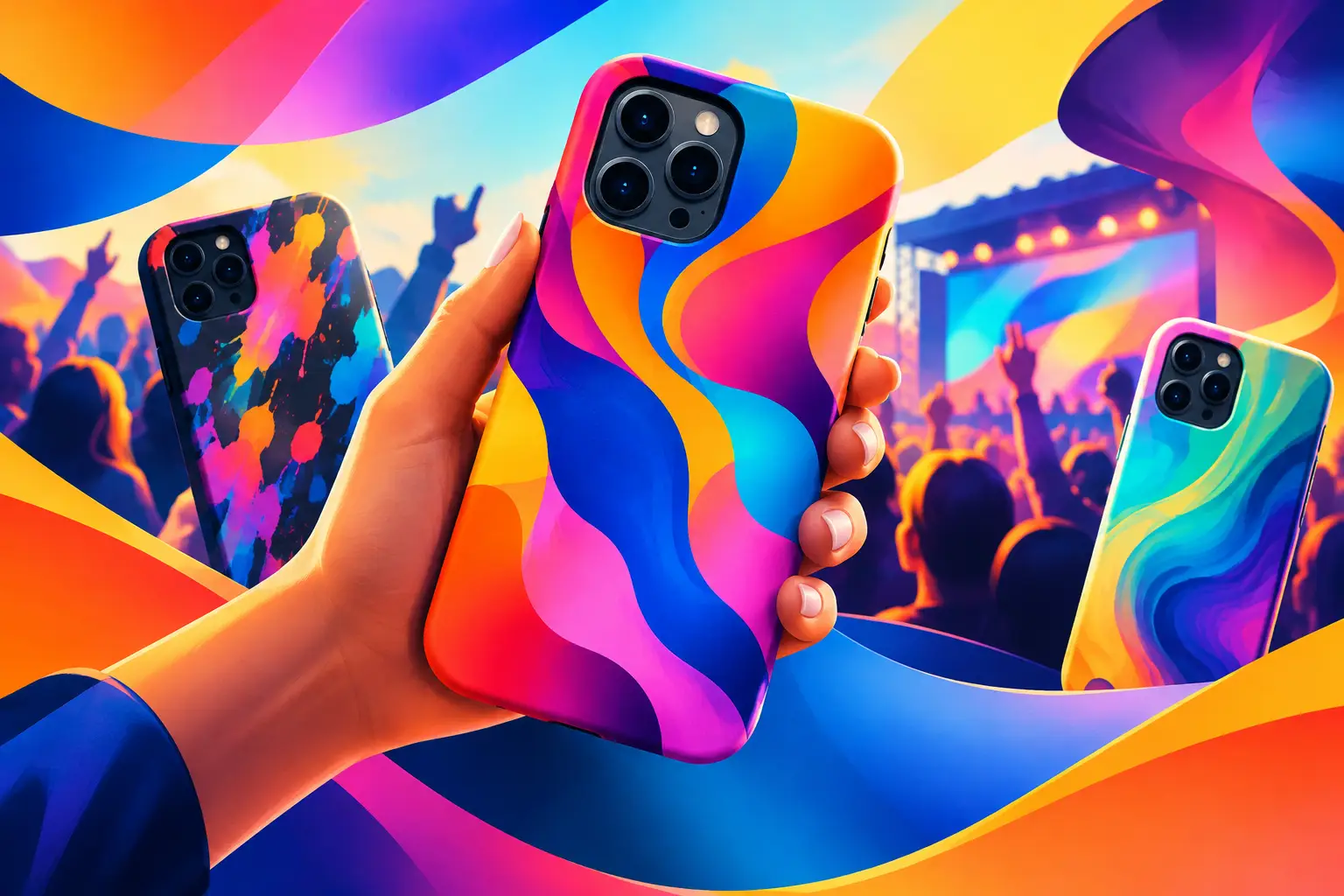
A tote bag can disappear into a closet. A generic charger can end up in a drawer. But a phone case travels through the airport, onto dinner tables, into meetings, and across every mirror selfie after the event. That is why custom phone cases at events can do more than move branded merchandise. They put your activation directly into an attendee’s daily life.
The difference is participation. Handing out pre-printed cases says, “Here is our logo.” Letting someone create a case that reflects their style, their prompt, their favorite visual direction, or their event moment says, “This was made for you.” One is swag. The other is a retail-grade keepsake with a story attached.
Why phone cases earn attention on the event floor
Phone cases solve a familiar event-marketing problem: how do you create a premium takeaway that people genuinely want without turning the booth into a slow, complicated retail operation?
A well-built live phone case activation answers that question in seconds. Attendees choose a visual route, interact with a branded AI design experience, see their idea become a one-of-one artwork, and watch it print on a case made for their actual device. The moment is visual, personal, and easy to understand from across a busy show floor.
That visibility matters. A queue around a merch table is not automatically a success. A queue where people are comparing designs, filming the print process, and showing friends the case they just created is an activation generating its own momentum.
For brands, the format also has an unusually clear value exchange. Attendees are willing to spend a few minutes engaging because the result is useful and personal. The brand earns attention without forcing a hard sell or relying on a forgettable photo backdrop.
The product is already part of their identity
Unlike many promotional items, a phone case is not an occasional-use object. It is visible dozens of times a day. It can signal taste, fandom, humor, team pride, or membership in a cultural moment. That makes the creative standard higher, but it also makes the payoff larger.
The goal is not to cover the case in logos. The goal is to give attendees a design they would choose even if nobody asked them to represent the brand. Brand codes can live in the color palette, textures, campaign language, visual world, and subtle signature details. When the case feels designed rather than decorated, people keep it on.
Designing custom phone cases at events that feel worth keeping
The best concept starts before anyone chooses a printer. It starts with the event brief: who is coming, what do they care about, what should they feel, and what does the brand need the interaction to accomplish?
At a tech conference, the experience may invite attendees to imagine their future workspace, product avatar, or digital alter ego. At a sports activation, it might generate bold player-card graphics, hometown colorways, or fan energy. At a fashion-forward festival, the visual language can lean editorial, surreal, nostalgic, or streetwear-inspired.
Generative AI expands the creative surface without making the attendee do all the work. A good interface offers enough choice for authorship while keeping the path fast. Prompt starters, branded style selections, and thoughtful guardrails prevent the experience from becoming an empty text box with unpredictable results.
Make the brand part of the visual language
There is a trade-off between brand visibility and product desirability. Oversize logos may satisfy a traditional sponsorship checklist, but they can lower the chance that a guest uses the case after the event. Invisible branding, on the other hand, can waste a valuable brand moment.
The answer is intentional integration. Build the identity into the artwork rather than stamping it on afterward. A signature palette, icon system, campaign motif, custom typographic treatment, or recognizable character can make every output unmistakably connected to the brand while still giving attendees space to make it their own.
Think one of infinity, not one of four. A small set of pre-made templates can work for a limited audience or tight footprint, but it cannot create the feeling of discovery that makes people return with colleagues. Personalized AI design gives each attendee a reason to see what happens when they participate.
Plan for device reality, not just the hero mockup
Phone cases have an operational wrinkle that T-shirts and posters do not: attendees carry different models. An activation should identify the likely device mix, stock compatible case formats, and communicate availability clearly without making the experience feel restrictive.
This is where event strategy matters. For an audience with a predictable device profile, on-site inventory can cover the majority of demand. For a broader public audience, the team may prioritize the most common models and offer an alternate product path for attendees whose phones fall outside stocked formats. Nobody should reach the final step only to learn they cannot participate.
Case selection also affects perceived quality. The blank should feel protective and polished, not flimsy or disposable. Print placement needs to respect camera cutouts, edge behavior, and the proportions of each model. These details are easy to overlook in a pitch deck and impossible to overlook when someone puts the product on their phone.
The live-production experience is the campaign
A personalized case becomes more valuable when people can watch it move from screen to physical object. That production theater creates proof. Guests see that the product is not a mockup, a delayed mailer, or a giveaway pulled from a box.
Speed protects that magic. If creating a design is exciting but fulfillment takes ten minutes, the line can become the whole experience. If the flow is too fast and opaque, guests may not understand what makes it special. The sweet spot is a clear sequence: create, approve, print, collect. Each stage should be visible, staffed, and built to keep the crowd moving.
Live Printing AI produces personalized items in under thirty seconds, making it possible to preserve the instant-gratification feeling that event audiences expect. But fast production is only one part of the system. Equipment, staffing, inventory, design moderation, power, connectivity, queue management, and contingency planning all determine whether the activation feels premium at peak traffic.
Build for throughput, then protect the experience
A phone case bar can be a high-demand attraction, especially when it sits inside a conference booth, sponsor lounge, festival footprint, or product launch. Estimate demand realistically. Consider event attendance, booth traffic, dwell time, operating hours, and the percentage of people likely to convert once they see the output.
Then plan the activation around its busiest hour, not its quietest. More creation stations may be necessary before adding more production capacity. A dedicated host can help attendees select styles and complete choices before they reach the print area. Clear digital displays can show examples and set expectations while the queue moves.
The experience should feel curated, not chaotic. Attendees do not need to see every operational decision, but they should feel the confidence behind them.
Measure more than units distributed
Traditional swag reporting often ends with a number: 2,000 units handed out. That metric says little about whether people cared, shared, or remembered who made the moment possible.
Custom phone case activations create more useful signals. Track design sessions, completed products, average interaction time, queue conversion, repeat visits, social captures, lead opt-ins where appropriate, and the creative choices audiences make. The art itself can reveal which themes, moods, or campaign directions resonate most.
Not every event needs data collection. A cultural festival may prioritize joy, visibility, and brand affinity over lead capture. A B2B conference may use the design experience to begin a sales conversation or route qualified attendees to a demo. The merchandise format stays compelling, but the surrounding journey should change based on the campaign objective.
There is also a sustainability case worth making carefully. Made-to-order production can reduce the guesswork and leftover inventory that come with ordering thousands of identical items before an event. It does not eliminate material use, and a phone case should never be treated as disposable. The stronger approach is to produce a useful, durable product that attendees actively choose and keep.
Choose the moment when personalization has the most to say
Custom phone cases are not the right answer for every event. If your audience needs a simple, high-volume handout at a stadium gate, another product may fit better. If device variety is exceptionally broad and the footprint is tight, consider whether cases should be one part of a wider personalized merchandise mix.
But when the brief calls for premium engagement, visible self-expression, social energy, and a takeaway with real staying power, the format is hard to ignore. The phone is already the most personal object in the room. Give attendees a reason to make it part of your brand story - on their own terms.
Ready to run an activation like this?
Start with the AI Product Generator or get a custom quote for your next event.