On-Site Poster Printing Activation That Gets Kept
Build an on-site poster printing activation that turns attendee ideas into retail-quality keepsakes, fuels sharing, and leaves generic swag behind for good
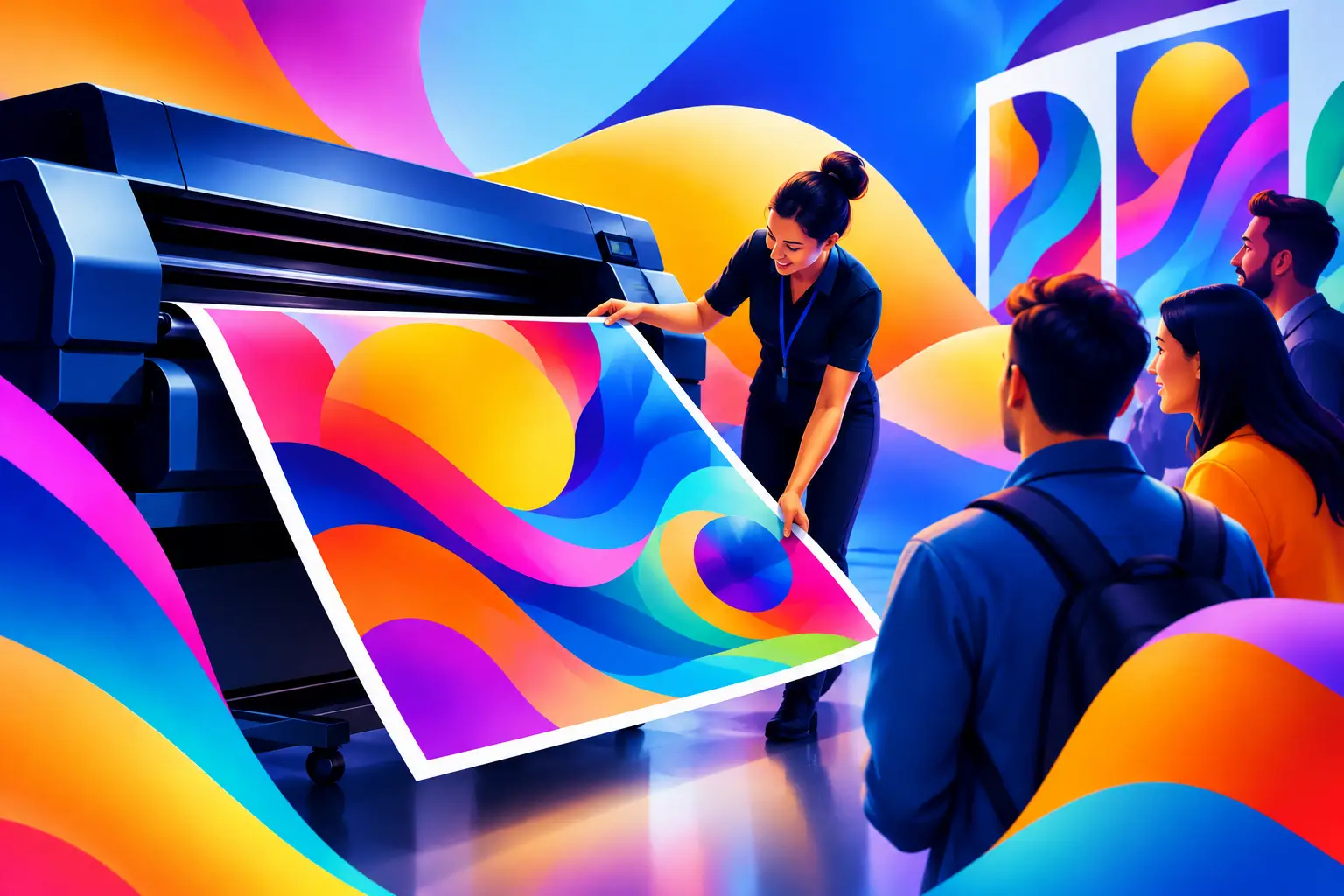
A poster tube in someone’s hand changes the visual language of an event. It signals that they did not just pick up another branded giveaway. They made something worth protecting. An on-site poster printing activation turns a flat wall graphic or a forgettable handout into a live creative moment: attendees shape the design, watch it print, and leave with a piece they want on their wall.
For brands competing for attention at packed trade show floors, cultural festivals, conferences, and sponsorship events, that distinction matters. Generic swag is one of four. A custom poster is one of infinity.
Why Posters Work When the Experience Is the Product
Posters sit in a rare sweet spot for experiential teams. They are highly visual, immediately understandable, easy to carry, and large enough to make the attendee’s creative choices feel real. Unlike a logo-covered stress ball, a well-produced poster has cultural value. It can live in a dorm room, office, studio, bedroom, or social post long after the event floor has been broken down.
That lasting visibility is only part of the appeal. The stronger advantage is participation. When attendees choose a style, add a prompt, select a visual direction, or personalize a design with generative AI, the brand moves from broadcaster to creative collaborator. The poster becomes evidence of a moment they helped create.
For event marketers, that changes the exchange. You are no longer asking someone to take a promotional item. You are offering them a chance to make something that feels personal, premium, and unexpectedly collectible.
Build the On-Site Poster Printing Activation Around a Real Choice
The fastest way to make a live poster experience feel disposable is to offer a filter menu that could belong to any brand. Personalization needs a point of view. Start with the campaign idea, the audience’s creative language, and the environment where the activation will live.
A sports-lifestyle partnership might invite fans to create a bold player-card poster with team-inspired typography and their own game-day energy. A tech conference may use editorial graphics, future-city visuals, or personalized career archetypes. A beauty or fashion event can lean into magazine-cover styling, art-directed color palettes, and campaign-grade portrait treatments.
The attendee should have meaningful control, but not unlimited decisions. Too many options create a line bottleneck and make the experience feel like work. A few intentional inputs usually perform better: a short prompt, a visual style, a color direction, and perhaps a name or event-specific phrase. The system should do the complex creative work in the background while the attendee sees a clear path from idea to printed art.
That is where the event brief earns its keep. Before production starts, define the brand assets that cannot move, the creative territory that should stay flexible, the tone that will resonate with the audience, and the level of personalization appropriate for the setting. An executive summit may need restrained, premium design. A music festival can push further into maximalism. The right answer depends on the brand, venue, expected volume, and how much time guests are willing to spend at the station.
Make AI Feel Like a Creative Director, Not a Gimmick
Generative AI is compelling when it produces designs people could not get from a standard photo booth or merch table. It should not be presented as a novelty button. It should be the engine behind a branded creative universe.
A well-configured experience uses the brand’s identity as a guide rather than a watermark. Think signature colors, visual references, campaign motifs, typography rules, and approved subject matter translated into a design system. Attendees still get original outputs, but the work belongs unmistakably to the event.
The result is a better balance of freedom and control. Every print is different, yet none of them feel off-brand.
The Print Moment Is Part of the Show
A digital design alone does not create event energy. The production reveal does. Guests should see their image move from screen to physical poster quickly enough that the connection feels immediate. At Live Printing AI, personalized products can print in under thirty seconds, giving the activation the pace needed for high-traffic environments without reducing the experience to a vending machine.
The physical setup deserves the same attention as the screen flow. A clean, gallery-like display of sample posters helps guests understand what they are about to make. A visible printer or production station adds theater. Staff members should be able to guide creative decisions, manage the line, inspect finished pieces, and make the handoff feel like a retail experience rather than a fulfillment counter.
Paper stock, finish, and packaging matter here. A thin sheet handed over loose can make even a great design feel temporary. A quality poster stock, crisp color, and protective sleeve or tube say the opposite. They also solve the practical problem of attendees carrying a print through a busy venue, airport, or festival site.
Design for Throughput Before You Design the Backdrop
Beautiful activations fail when the line moves slowly. If a guest spends two minutes creating a design, another minute approving it, and another minute waiting for print, the math becomes unforgiving during a keynote break or a headline act changeover.
Start by forecasting demand. Estimate attendee traffic by hour, identify peak windows, and decide how many posters the experience needs to produce without compromising quality. Then build the production configuration around that target: the number of creation stations, print devices, trained staff, approved design paths, and the space needed for queueing and pickup.
There is a trade-off between deep personalization and maximum volume. A single, highly tailored poster can be the right choice for a VIP lounge, executive dinner, or brand-hosted creator event. A larger conference footprint may need faster inputs and a more guided visual system to serve hundreds or thousands of guests. Neither approach is inherently better. The mistake is promising a bespoke studio session while staffing for a quick giveaway.
Plan for the Details Guests Never See
The most successful live print activations look effortless because the operational work is handled before doors open. That includes power and internet planning, equipment access, venue load-in rules, paper inventory, replacement supplies, color testing, privacy considerations, and a contingency plan for connectivity or hardware interruptions.
Staffing should reflect the actual guest journey. One team member can welcome and qualify attendees. Another can support creation. Production specialists can keep prints moving and check output quality, while a host manages the handoff and invites guests to photograph or share their finished poster. This division keeps the experience warm without sacrificing speed.
If attendee photos or names are part of the design, establish clear consent and moderation rules. Not every event needs image capture, and not every audience wants it. Text-led or prompt-led creation can still generate highly personal art while reducing friction.
Give the Poster a Reason to Travel Beyond the Event
The best post-event metric is not simply how many posters were printed. It is how many people cared enough to photograph them, carry them home, display them, or talk about the experience afterward.
Create a handoff moment with visual value. A branded photo area, a rack of freshly printed work, or a quick portrait of the guest holding their poster can turn the final exchange into shareable content. Keep it optional. Forced social prompts can drain the cool factor from a genuinely good object. If the design is strong, guests will do the distribution for you.
You can also use the poster series to extend the campaign narrative. Limited event-only visual styles create scarcity. City-specific treatments can make multi-market tours feel locally rooted. A collection of attendee-generated posters can become a live gallery, showing the range of personalities the brand brought together.
That said, avoid treating every poster as a lead-capture device. The experience should earn attention first. If data collection is necessary, make the value exchange transparent and quick. People can sense when a creative activation is really just a form with better lighting.
A Better Alternative to Pre-Produced Swag
Pre-ordering thousands of identical items means guessing what people will want, shipping excess inventory, and hoping the leftovers do not end up in storage or landfill. Made-to-order posters reverse that model. Production follows participation.
This does not eliminate planning. It makes planning smarter. You still need to forecast capacity and stock materials, but you avoid printing a warehouse full of identical designs before the audience has even arrived. The brand spends less energy pushing objects outward and more energy creating a reason for guests to opt in.
A poster activation will not fit every objective. If the audience needs a wearable item for immediate visibility, T-shirts or tote bags may be the stronger format. If the venue has limited dwell time, a smaller take-away could be more practical. But when the goal is high perceived value, visual storytelling, and a creative interaction people will actually remember, posters have unusual power.
A wall-worthy print gives attendees something better than a logo to carry home: proof that the brand made room for their point of view.
Ready to run an activation like this?
Start with the AI Product Generator or get a custom quote for your next event.