Preprinted Swag Versus Made-to-Order Merchandise
Preprinted swag versus made-to-order merchandise: compare cost, waste, speed, engagement, and event impact to choose a smarter activation model at scale.
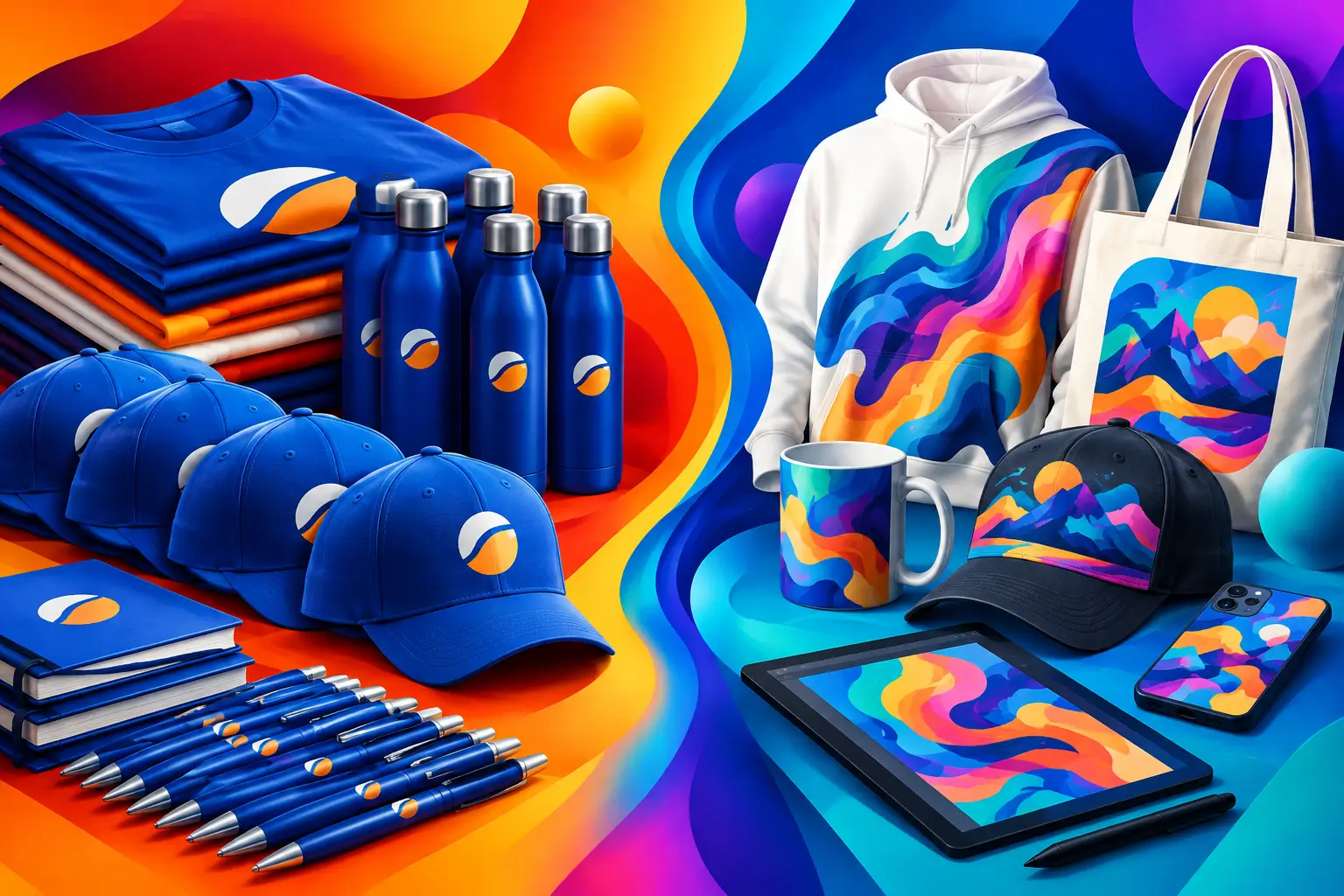
A giveaway table full of identical tote bags can move product. It rarely moves people. The real choice in preprinted swag versus made-to-order merchandise is not simply whether to print before an event or during it. It is whether merchandise is a logistical necessity or a live brand moment attendees actively want to join.
For high-visibility conferences, festivals, launches, and trade shows, that distinction shows up in the crowd. One model asks attendees to take something. The other invites them to create something worth keeping, wearing, photographing, and talking about after the show floor closes.
Preprinted swag versus made-to-order merchandise: the real difference
Preprinted swag is the familiar event model: forecast attendance, select a product, approve a design, order units in advance, ship cartons, then distribute what arrives. It is dependable when every attendee needs the same item, the design is fixed, and the event has little room for on-site production.
Made-to-order merchandise changes the attendee's role. Rather than choosing from a few preset graphics, they can shape a design through a branded creative experience, then receive a finished product printed on site. With the right production setup, that product can be ready in under thirty seconds.
That does not make preprinted merchandise obsolete. It makes it a different tool. A sponsor with a simple employee uniform need may reasonably choose preprinted apparel. A brand trying to create a line, earn social content, or make a product launch feel culturally current needs to consider what a generic item cannot do: give the attendee authorship.
The cost conversation is bigger than unit price
Preprinted swag often wins the first spreadsheet comparison. Higher quantities usually lower the per-unit cost, and the order is placed well before event day. But the unit price is only one line in the actual cost of an activation.
Forecasting errors create leftovers. Size runs create imbalance. A hundred small shirts may disappear while medium and XXL inventory remains boxed under a drape. A design that felt timely during procurement can look dated by the time the event opens. Add freight, storage, post-event handling, and disposal, and inexpensive swag can become surprisingly expensive.
Made-to-order merchandise has a different cost structure. It requires event-ready equipment, trained operators, queue design, power planning, premium blanks, and a production partner who understands how to keep an experience moving. Those are real investments. They are also what turn a product station into an activation rather than a bottleneck.
The better financial question is: what value does each unit need to generate? If an item is meant to fill a bag, preprint may be efficient. If it must create meaningful dwell time, capture opt-in engagement, support a campaign message, and leave the venue in a social post, its value is no longer measured by cost per shirt alone.
Inventory risk becomes an opportunity problem
Most event teams have lived through the same scene: the popular color is gone before lunch, the wrong sizes are left, and staff start telling guests to take whatever is available. That is not a brand experience. It is inventory triage.
On-demand production creates products when demand is real. Attendees can choose a garment style or color within the activation plan, and production follows the actual mix of people who show up. Instead of betting heavily on a single static design, teams can build an experience around a brand world with nearly limitless participant outcomes.
This model also gives creative teams more room to respond. A generative AI design experience can be configured around an event brief, audience profile, brand identity, and campaign goals. The output stays recognizably on-brand while avoiding the feeling that everyone received one of four approved options.
One of infinity is a stronger memory than one of four.
There are limits, of course. Made-to-order does not eliminate planning. It shifts planning from inventory forecasting toward production forecasting. Event teams still need to estimate traffic, define operating hours, select products that print beautifully, and design a queue that feels intentional. At high-volume moments, the experience must be engineered with the same discipline as registration, catering, or a main-stage program.
Personalization changes what attendees do next
A branded T-shirt becomes more valuable when it feels chosen rather than issued. The difference is emotional, but it is also behavioral. People wear products that represent them. They photograph products they helped create. They are more likely to return to an activation when they see a colleague walk away with something distinct.
That behavior creates a compounding effect on the show floor. The product becomes proof that something interesting is happening. A visible line can signal demand when it moves quickly and has a clear payoff. The people leaving the station become walking creative for the people who have not joined yet.
This is where generic swag often underperforms. It treats merchandise as the last step of an attendee journey. Made-to-order production can make it the centerpiece: prompt, create, approve, print, reveal, share. Each stage provides a reason to pause and a natural opening for brand storytelling or staff conversation.
For a fashion-forward festival, that might mean an AI-generated graphic informed by the attendee's style prompt. For a conference, it could mean a personalized poster or tote that turns a campaign idea into something physical. For a sports-lifestyle partnership, it may be a retail-grade tee that lets fans create their own version of the collaboration. The product format should follow the moment, not a default catalog.
Premium materials protect the idea
Personalization cannot rescue a weak product. If the blank feels thin, the print looks temporary, or the item does not fit into an attendee's real life, the activation loses credibility after the novelty wears off.
That is why material selection matters as much as the design technology. Retail-grade apparel, quality tote construction, durable phone cases, and thoughtfully selected wood or leather goods give the final piece a reason to survive beyond the event. A premium object says the brand respected the attendee's time and taste.
Preprinted programs can absolutely use premium goods. The difference is that made-to-order production adds relevance to that quality. Instead of handing everyone the same elevated item, the brand gives each person a piece with a personal connection. The result feels less promotional and more collectible.
When preprinted swag is still the smart call
There are events where preprinted merchandise is the right operational decision. A short employee meeting with no activation footprint, a giveaway needed across dozens of locations, or a time-sensitive program with limited access to power and load-in support may not justify live production.
It also works when consistency is the entire point. Team uniforms, credential-adjacent items, or a campaign where the approved artwork cannot vary are strong candidates for advance production. The goal is not to force personalization into every event. The goal is to stop using preprinted swag by default when the brief calls for energy, individuality, and participation.
A hybrid approach can be especially effective. Preprinted core items can cover staff, VIP kits, or guaranteed distribution, while made-to-order products anchor the public-facing activation. That gives organizers a dependable baseline without sacrificing the experience attendees will remember.
Choose the model that matches the moment
Before approving a merchandise order, ask what the product is supposed to accomplish after it leaves the venue. If the answer is simply distribution, preprinted swag may do the job. If the answer includes conversation, creation, visibility, and lasting brand affinity, the merchandise needs a live role.
Live Printing AI plans that role from the event brief through on-site fulfillment, pairing branded AI creation with premium product formats and fast production. The point is not to add technology for its own sake. It is to replace the passive merch table with a moment people choose to be part of.
The strongest event merchandise does not ask, “How many units can we give away?” It asks, “What will people be proud to take home?”
Ready to run an activation like this?
Start with the AI Product Generator or get a custom quote for your next event.