AI Merchandise Generator for Better Event Swag
An AI merchandise generator turns event swag into fast, personal, retail-quality products attendees create, keep, share, and remember long after the show.
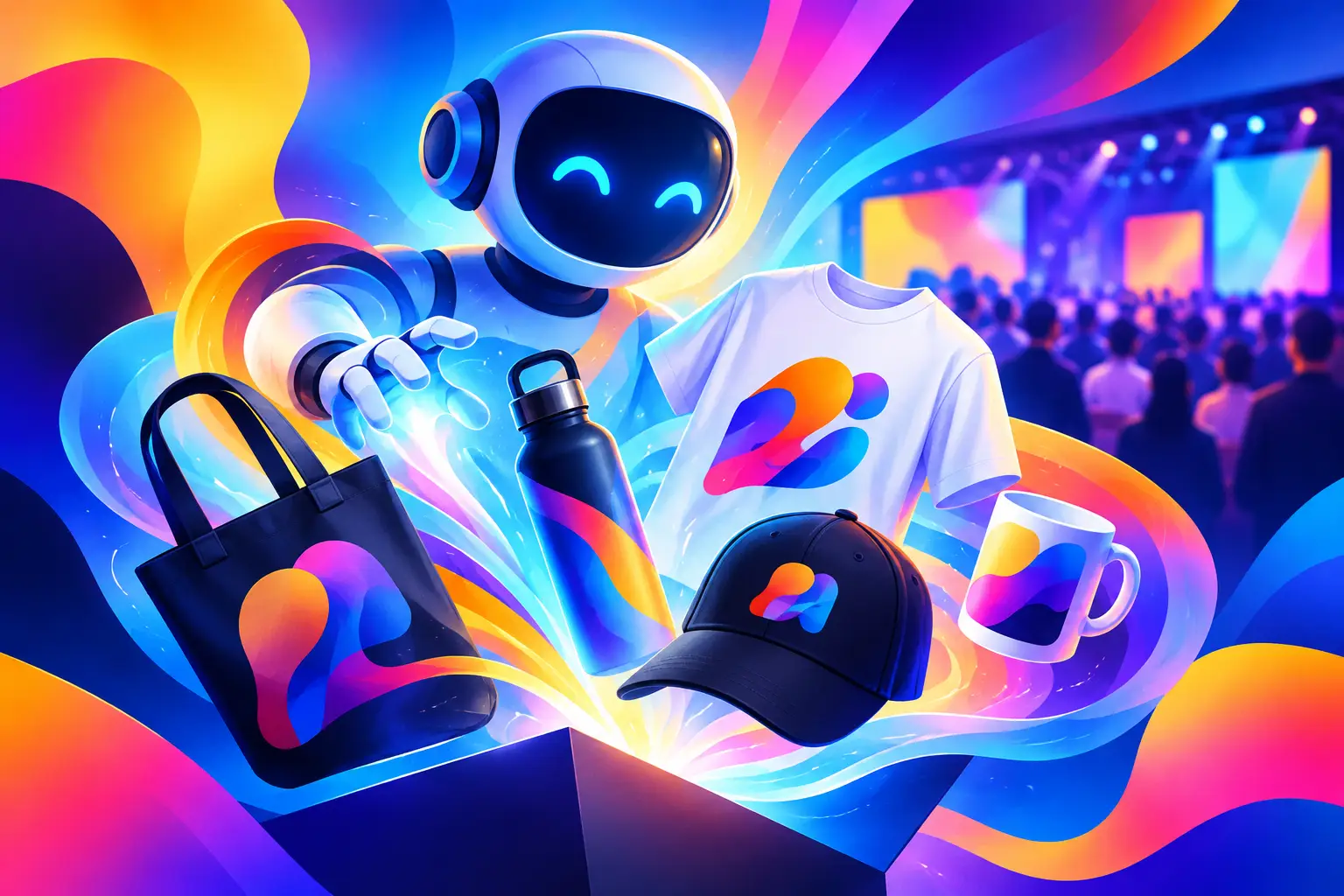
A tote bag with a logo is a giveaway. A tote bag an attendee helped create is a receipt for a moment they want to talk about. That is the difference an AI merchandise generator brings to an event floor: it turns branded merchandise from a static inventory problem into a live participation engine.
For event marketers, the appeal is not novelty for novelty’s sake. The right AI-powered merchandise experience gives people a reason to stop, create, return, post, and carry the brand beyond the venue. It replaces the familiar table of pre-printed extras with one-of-one products made for the person standing in front of you.
What an AI Merchandise Generator Actually Does
An AI merchandise generator lets attendees create custom artwork through guided prompts, visual choices, or a branded creative interface. Instead of choosing from three approved T-shirt graphics, they can generate a design shaped by their interests, a photo moment, a campaign theme, or a playful prompt tied to the event.
The important word is guided. A serious brand activation is not handing an open image model to a crowd and hoping for the best. The experience should be configured around the event brief, audience, campaign goals, brand identity, and product format. That means the creative range can feel expansive while the output remains appropriate, recognizable, and ready to print.
At Live Printing AI, that generated artwork can move directly into live production on premium T-shirts, tote bags, posters, phone cases, wood, and leather goods. The product is created at the event, with prints produced in under thirty seconds. The result feels less like promotional merch and more like a retail-grade artifact from an experience that could not have happened anywhere else.
Why Generic Swag Has Become a Brand Liability
Most event merchandise follows an old operating model: forecast demand, choose a safe graphic, order inventory, ship boxes, and distribute what is left. It is efficient on a spreadsheet. It is also why conference tote bags become closet clutter and sponsor lounges blur together.
Generic merchandise sends a quiet message: this was made for everyone, so it was made for no one. That is a weak exchange at events where attention is expensive and brand perception is being formed in real time.
An AI merchandise generator changes the value proposition. Attendees are not merely receiving an object. They are making choices, seeing an idea take shape, and watching it become physical. Participation creates ownership. Ownership creates a stronger reason to keep the product, photograph it, and show it to someone else.
That matters most at high-visibility events where audiences have seen every standard activation mechanic. A branded sweatshirt station may attract a line. A station where guests create their own campaign-world sweatshirt creates a story. One is distribution. The other is an experience people will actually remember.
The Best Activations Put Constraints Around Creativity
The strongest generative merchandise concepts do not begin with, “What can AI make?” They begin with, “What do we want attendees to feel, create, and take away?”
A beauty brand might build an editorial-style portrait generator around self-expression and color. A sports sponsor may let fans turn their game-day energy into bold graphic art. A B2B software company can make technical themes feel surprisingly collectible through futuristic poster designs, team archetypes, or visualized event memories.
The system needs creative guardrails. Prompt starters, approved style directions, brand color logic, visual references, and moderation rules all protect the work from looking random or drifting away from the campaign. This is where experiential strategy matters as much as the model itself.
Too much freedom can slow the line and produce designs that feel disconnected from the brand. Too little freedom creates a dressed-up template selector. The sweet spot is a creative playground with a clear point of view: enough room for each attendee to make it theirs, enough direction for every product to belong unmistakably to the activation.
Start With the Product, Not the Prompt
The canvas shapes the experience. A poster can support detailed compositions and works well for conference takeaways, gallery-inspired moments, and collectible artist collaborations. A T-shirt has more social visibility and stronger perceived value, especially when paired with premium blanks. Totes are practical for trade shows, while leather and wood goods can make a smaller VIP moment feel elevated.
Material also affects production planning. Printing methods, color handling, print area, curing time, and the physical footprint of the activation need to be considered before the creative interface is built. A concept that looks brilliant in a digital mockup still has to work under show-floor lighting, through peak traffic, and in the hands of actual attendees.
Designing for Throughput Without Killing the Magic
The operational question is simple: can the experience handle the crowd you expect? The answer depends on product complexity, the number of production stations, attendee interaction time, staffing, and whether fulfillment happens immediately or through a later pickup window.
Fast printing helps, but printing speed alone is not the whole story. If guests take ten minutes to decide on a prompt, the bottleneck is the interface. If the design approval flow is unclear, the bottleneck is staffing. If a festival crowd arrives in waves, the layout needs a line strategy that keeps the experience visible without making participation feel like work.
A well-designed activation moves people through a clear sequence: attract, create, approve, print, reveal, and share. Each stage should have a purpose. Brand ambassadors can help attendees find a direction without taking control away from them. On-screen previews build anticipation. The reveal is the payoff, and it deserves a setting that looks good in photos.
For major conferences and festivals, scale may mean multiple printers, multiple creation tablets, dedicated production staff, and a product mix matched to expected dwell time. For a selective executive event, it may mean fewer products, more premium materials, and a calmer concierge-style interaction. It depends on the audience and the value of each moment, not just total headcount.
Make Measurement Part of the Experience
Merchandise is often treated as an expense line because its impact is hard to quantify. A generative activation creates more useful signals when it is planned correctly.
Track creations started, completed designs, products printed, average interaction time, product preferences, and sharing behavior. If registration or lead capture is appropriate for the setting, it should be transparent and proportionate to the exchange. No one wants to solve a form just to make a T-shirt.
The qualitative value matters too. Watch what attendees create. Their choices can reveal how they see the brand, what themes resonate, and which visual directions earn the biggest reactions. This does not replace research, but it gives marketing teams a live pulse check that a pallet of pre-printed giveaways never could.
Social content is another multiplier, but it should be earned rather than demanded. A product people genuinely want to wear or display will show up in photos naturally. Build a clear visual moment around the creation and reveal, then let attendees decide whether it belongs on their feed.
Where AI-Generated Merchandise Fits Best
This format works especially well when a brand needs participation, differentiation, or a meaningful physical takeaway. Product launches can turn features or campaign worlds into attendee-created graphics. Trade shows can convert booth traffic into a memorable interaction rather than another badge scan. Sponsorships can give fans a personalized reason to visit a partner footprint.
It is equally effective for internal summits, where employees can create products that reflect team identity, shared goals, or the culture of the gathering. For agencies, it offers a flexible creative platform that can be tailored to a client’s world instead of forcing every idea into the same photo booth or prize wheel.
There are cases where it is not the right answer. If an event requires identical uniforms, tightly controlled product graphics, or extremely high-volume handouts with no interaction time, pre-produced merchandise may be more practical. AI-generated products are built for perceived value and participation, not for distributing the maximum number of objects per hour.
The better question is not, “Can we put AI on merch?” It is, “Can we give people a role in making something they will care about?” When the answer is yes, one of infinity beats one of four every time.
Your next event does not need more stuff with a logo on it. It needs a reason for people to stop, make, and leave with proof that they were part of something worth keeping.
Ready to run an activation like this?
Start with the AI Product Generator or get a custom quote for your next event.