Trade Show Booth Engagement Guide That Works
This trade show booth engagement guide shows how to turn foot traffic into real conversations, personalized moments, and measurable event value for brands.
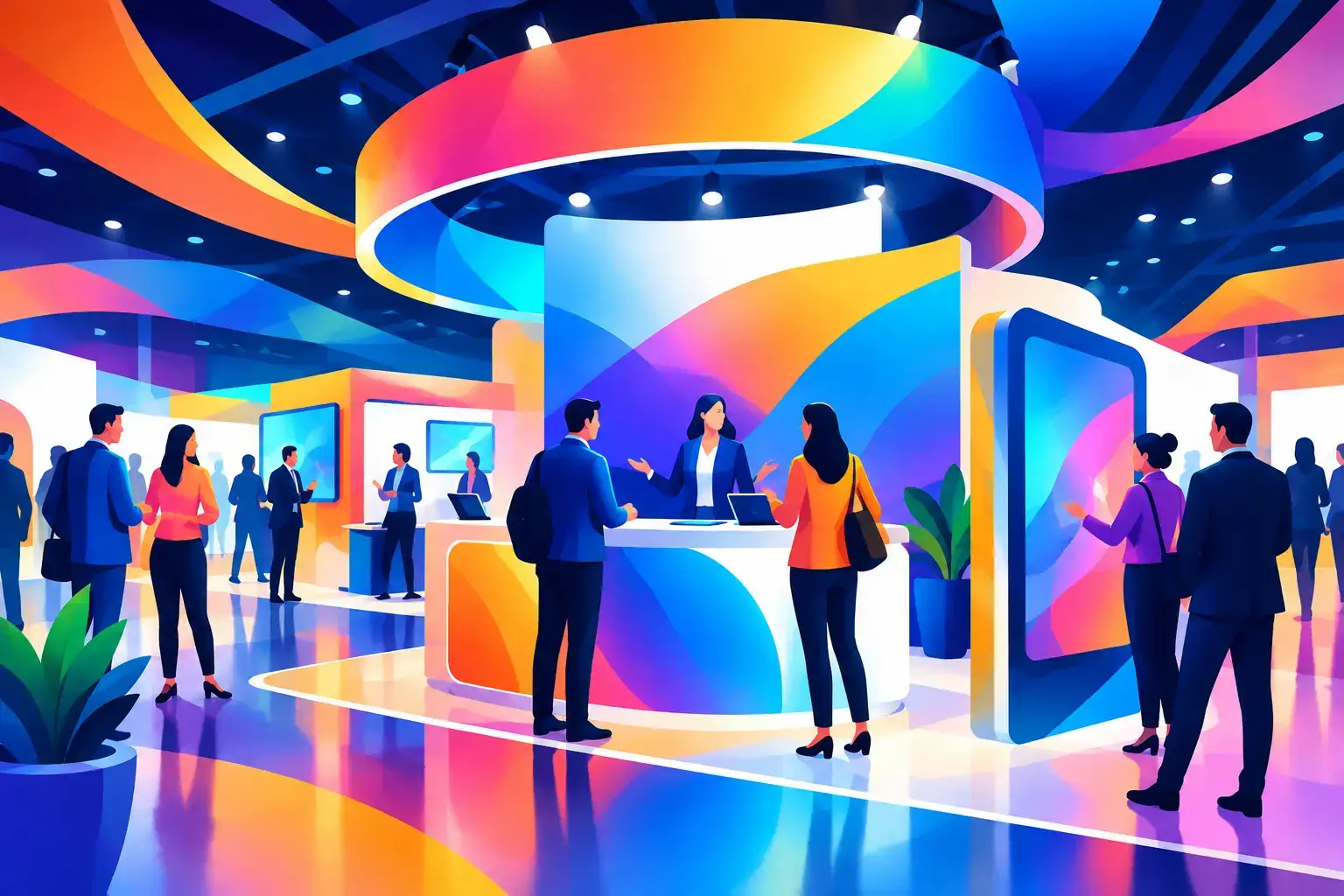
A crowded aisle is not the same thing as a successful booth. If attendees glance at your logo, grab a generic giveaway, and keep walking, you paid for visibility without earning attention. This trade show booth engagement guide is built for teams that need more: qualified conversations, memorable brand moments, shareable content, and proof that the floor space worked.
The hard truth is that trade show attendees have developed a fast filter. They can spot a bowl of candy, a spinning prize wheel, and another branded tote from twenty feet away. Your booth has a few seconds to communicate why stopping will be worth their time. The answer is rarely a louder backdrop. It is a better reason to participate.
Start With the Behavior You Want
Before choosing a booth activity, define the action that matters after someone steps inside. Do you need product discovery conversations with enterprise buyers? Are you building a prospect list for a field sales team? Do you need social reach around a launch, or are you trying to reward existing customers and partners?
These goals shape the experience. A complicated demo may be right for a highly technical audience with scheduled meetings. It is a poor fit for a broad expo floor where people have ninety seconds between appointments. Likewise, a high-volume giveaway can create a visible crowd, but it will not automatically produce qualified leads.
Build the engagement around one primary behavior and one supporting behavior. For example, a software company might want attendees to answer a business challenge prompt, then book a consult. A consumer brand may want guests to create a personalized product, then share it socially. Keep the call to action specific enough that your staff can recognize success in real time.
Make Your Trade Show Booth Engagement Worth the Stop
The strongest booth experiences offer a clear exchange: give us a moment of participation, and get something genuinely useful, surprising, or personal in return. That exchange must be legible from the aisle. If people need a staffer to explain what is happening, you are already asking too much.
A compelling headline, a visible participant, and a tangible result do most of the work. Think of someone seeing a guest customize artwork on a screen, then receive a retail-quality shirt minutes later. The value is instantly understood. It creates curiosity without forcing a pitch.
Personalization is especially effective because it shifts merchandise from an object with your logo on it to an object people chose for themselves. One of infinity, not one of four. When the attendee has creative input, the brand becomes part of a story they want to keep, wear, photograph, and talk about.
That does not mean every experience needs generative AI or live production. The right format depends on your footprint, throughput target, audience, and message. But the standard should stay high: avoid activities that feel like a transaction designed to clear inventory.
Design for the Three-Second Decision
Your booth should answer three questions before an attendee crosses the aisle: What is this? What do I get? How do I start?
Use plain, benefit-led language. “Create your one-of-one event tee” is clearer than “Explore our interactive customization ecosystem.” Show the output at a distance, whether that is a physical product, a visual reveal, or a live demonstration. Then make entry obvious with an open counter, a clear queue point, or a staff member positioned at the aisle rather than hidden behind furniture.
Do not crowd the front edge with retractable banners, literature racks, and equipment cases. The first few feet are invitation space. Give people room to pause without feeling trapped in a sales conversation.
Build a Journey, Not a Booth Activity
Great engagement has momentum. The attendee notices something interesting, participates quickly, sees a result, has a reason to talk, and leaves with a next step that makes sense. Each stage should support the next.
Start with an easy prompt. Ask guests to choose a creative style, answer one relevant question, select an industry challenge, or react to a campaign idea. Avoid long forms at the beginning. You can collect qualifying details after you have delivered value, not before.
Then create a reveal moment. It could be an AI-generated visual, a product match, a customized design, or a live comparison tied to your solution. People remember transitions. The moment where their input turns into something visible gives your team a natural conversation opener: “What made you choose that?” or “Here is how we built this around your answer.”
The final handoff deserves care. A thin giveaway in a plastic bag ends the story. A premium, made-to-order item with a simple photo moment extends it. If the product is worth carrying around the event, it becomes moving media on the show floor.
Balance Throughput With Conversation Quality
Every trade show booth engagement plan has a capacity limit. You can create the most desirable experience on the floor and still disappoint people if your line moves slowly. On the other hand, optimizing only for speed can turn a distinctive idea into another forgettable handout.
Calculate expected volume before committing. Estimate average dwell time, number of stations, production speed, peak traffic windows, staff roles, and whether people need to return for fulfillment. A live personalization activation that produces a premium item in under thirty seconds changes the math, but print time is only one variable. Check-in, design selection, packaging, and crowd management all matter.
Separate the roles where possible. One person should greet and explain. Another can guide creation or qualification. A production team should stay focused on fulfillment. When your account executive is also untangling a queue, neither the experience nor the sales conversation gets the attention it deserves.
Have a peak-hour plan. If demand surges after a keynote, you may need a simplified design flow, a timed return option, or an overflow engagement that still captures interest. The goal is not eliminating lines entirely. A visible, fast-moving line can be social proof. The goal is preventing uncertainty and abandonment.
Give Your Staff Better Lines Than “Can I Help You?”
Booth staff often default to broad questions because they are trying to be welcoming. Unfortunately, “What brings you to the show?” puts the work on the attendee. Better prompts connect directly to the experience and create an easy answer.
Try language such as, “Want to make one?” “Which direction would you take this design?” or “Are you here for the conference or the product launch?” These questions feel low-pressure, but they reveal useful context. From there, trained staff can earn the right to transition into business relevance.
Brief every team member on the engagement promise, queue flow, brand language, and lead criteria. They should know who gets a quick greeting, who merits a deeper discussion, and how to hand off a qualified prospect without interrupting the attendee experience. The best booths feel energetic because the staff is coordinated, not because everyone is talking at once.
Measure More Than Badge Scans
Badge scans tell you how many records entered your system. They do not tell you whether people cared. Track the full engagement picture: total participants, average dwell time, completion rate, qualified conversations, meetings booked, social posts or content captures, and cost per meaningful interaction.
Add a simple qualitative readout at the end of each day. What questions did people ask? Where did they hesitate? Which creative options did they choose? Did the experience attract your intended decision-makers or just freebie hunters? These observations often improve the next day more than a dashboard can.
For personalized merchandise activations, measure redemption and carry rate too. How many people actually completed the experience? How many left wearing or carrying the item? A product that remains visible after the booth visit can deliver brand exposure beyond the interaction itself.
Treat Sustainability as a Design Constraint
Disposable swag is expensive twice. You pay to produce it, then your audience pays attention to the fact that it is disposable. Made-to-order production reduces the need to guess sizes, colors, quantities, and designs months in advance. It also helps limit the leftovers that usually appear after an event.
Sustainability is not a substitute for creativity. A recycled item nobody wants is still an item nobody wants. Choose premium blanks, useful formats, and a production model that lets attendees opt in. The best outcome is less waste because the product earned a place in someone’s real life.
Live Printing AI approaches this as an end-to-end production decision, pairing branded AI creation with live, on-site fulfillment on apparel, accessories, paper goods, wood, and leather formats. The format should follow the audience and event objective, not a warehouse surplus.
Your next booth does not need more stuff. It needs a reason for people to stop, participate, and leave with a story worth repeating. Build that reason into the experience, then make every operational choice protect it.
Ready to run an activation like this?
Start with the AI Product Generator or get a custom quote for your next event.